

Africa has no shortage of commodities. Cocoa, cashew, crude oil, minerals and agricultural inputs move out of the continent every year to feed industries thousands of miles away. Producing a commodity and capturing its full economic value are two different achievements
For many African economies, the value chain still ends too early. Raw materials leave the country with limited processing, then return as finished or semi-finished products at a higher cost. The opportunity is not simply to export more. It is to build stronger commodity value chains that connect production to processing, manufacturing and reliable industrial supply.
For manufacturers and suppliers operating across Africa, that shift matters because it changes where value is created, where supply is located and how industrial markets can be served.
What are commodity value chains?
A commodity value chain covers the activities that move a raw material from its source to its final industrial or commercial use.
For an agricultural commodity, this might include farming, aggregation, processing, packaging, export and manufacturing. For minerals, it could extend from extraction and beneficiation to refining and industrial production.
The further a commodity moves through this chain before reaching its final market, the more opportunities there are to create value through processing, quality control, logistics, manufacturing and distribution.
Why exporting raw materials captures only part of the value
Exporting unprocessed commodities is not inherently a problem. International trade depends on commodities moving efficiently between markets, and exports remain an important source of revenue for many African economies.
The challenge is what happens when processing and manufacturing capacity remain concentrated elsewhere.
Consider a simple value chain. A producer supplies agricultural raw material. An intermediary aggregates it and exports it. A processor in another market converts it into an industrial input. A manufacturer then uses that input to produce a finished product.
The original producing market may have supplied the essential raw material, but much of the additional value is created further along the chain.
Moving up the value chain therefore means developing the capacity to perform more of these activities closer to where commodities are produced or where regional demand exists.
What stronger commodity value chains require
Building more resilient commodity value chains requires coordination across several layers.
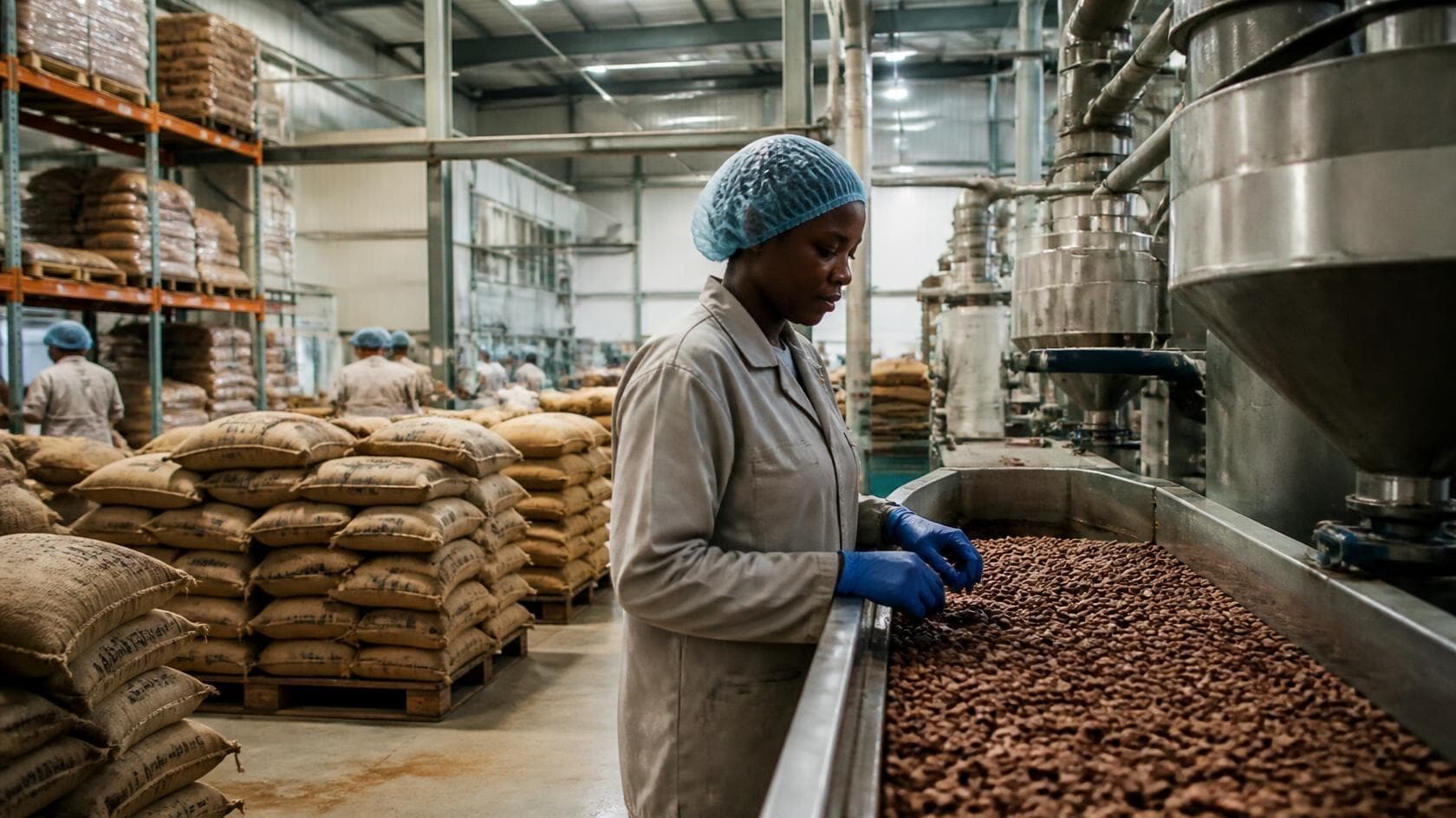
First is production and processing capacity. Raw materials need to be processed to the specifications required by downstream industries.
Second is logistics. Moving commodities from farms, mines and processing facilities to manufacturers requires dependable transport and storage networks.
Third is market access. Producers need visibility into where demand exists and what buyers actually require.
Finally, there is the commercial infrastructure that connects transactions. Pricing, procurement, documentation, payments and fulfilment all influence whether a supply relationship can operate consistently at scale.
These layers are interconnected. Improving one without addressing the others can leave the underlying bottleneck in
The opportunity for African industrial suppliers
For African suppliers, moving up the commodity value chain creates an opportunity to participate in more of the industrial economy built around the continent's resources.
That does not mean every commodity needs to be fully processed in its country of origin. Different products will have different economics, infrastructure requirements and viable processing points.
The more useful question is where each stage of the value chain can be performed competitively, and what infrastructure is needed to connect those stages to regional and global demand.
For manufacturers and industrial buyers, the result could be a supply landscape with more regional options, shorter supply chains and greater access to locally or regionally available inputs.
For suppliers, it means thinking beyond the commodity itself and building the systems required to make that commodity commercially useful at scale.
Building the next layer of African trade
Stronger commodity value chains connect raw materials to processing, manufacturing, distribution and end markets. They turn production capacity into industrial supply capacity.
The next phase of African trade will therefore depend not just on moving more commodities, but on building the infrastructure that allows more value to stay within the markets where those commodities originate and where demand is growing.
Explore how Matta's ecosystem supports commodity sourcing, movement and supplier operations across African trade. Explore the Matta ecosystem.