

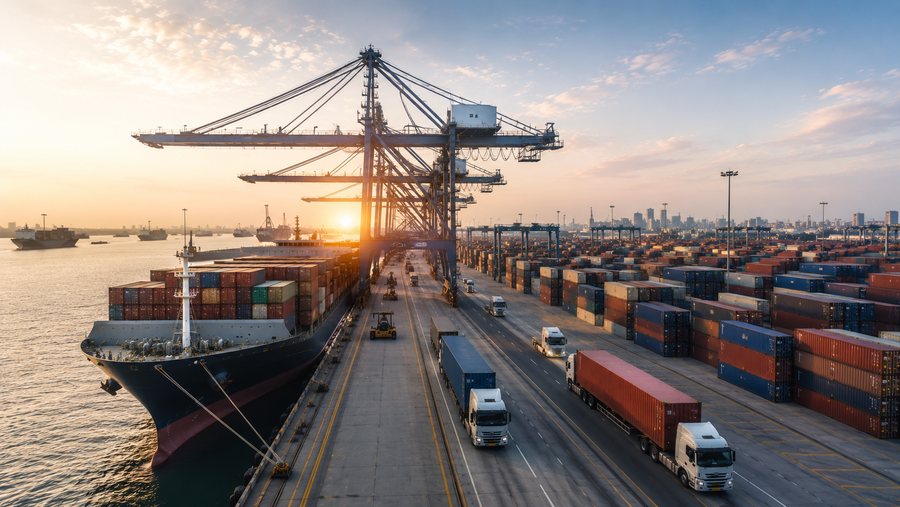
Coordinated logistics turns fragmented shipments into dependable fulfilment. The operational case for one accountable layer.
Ask any manufacturer or supplier what goes wrong most often in physical trade, and the answer is rarely the price. It is the delivery. Goods arrive late, short, damaged, or not at all. Each failed delivery is a production delay, a stranded payment, or a lost customer. Reducing failed deliveries is one of the highest-value operational improvements available in industrial trade — and it comes down to coordination.
Why deliveries fail
Most delivery failures are not caused by a single dramatic event. They are caused by fragmentation. A typical industrial shipment passes through several disconnected hands — the supplier, one or more transporters, warehousing, and the buyer — with no single party accountable for the outcome. Information is lost at each handoff. When something goes wrong, there is no one whose job it is to make it right.
This is the structural weakness of fragmented logistics: everyone is responsible for their leg of the journey, and no one is responsible for the delivery. Road freight, warehousing and last-mile coordination each work in isolation, and the gaps between them are where shipments fail.
The operational case for one accountable layer
The alternative is to coordinate the movement of goods through one accountable logistics layer — connecting road freight, warehousing, shipment tracking and delivery so that the whole journey is visible and someone stands behind the outcome. This is not about moving goods faster. It is about moving them dependably, with visibility and accountability from dispatch to arrival.
When logistics is coordinated rather than fragmented, three things improve. Visibility: buyers and suppliers can see where goods are and when they will arrive. Accountability: one layer is responsible for fulfilment, not a chain of parties each responsible for a fragment. And reliability: fewer handoffs mean fewer points of failure.
Fulfilment as part of the trade, not an afterthought
The deeper shift is treating fulfilment as part of the trade itself rather than a separate problem that begins after the deal is done. When logistics connects to the underlying transaction — when the movement of goods is coordinated alongside sourcing, financing and settlement — delivery stops being the weak link. Fulfilment becomes as dependable as the deal behind it.
That is the operating logic behind Flux by Matta, the logistics and trade-execution layer of the Matta ecosystem: coordinate road freight, warehousing, shipment tracking and delivery around physical trade, so fewer deliveries fail and more trade completes as agreed.
The bottom line
Failed deliveries are not an unavoidable cost of doing business in industrial trade. They are a symptom of fragmentation — and fragmentation is fixable. The operators who coordinate logistics through one accountable layer will see fewer failures, faster settlement and more repeat trade. In physical trade, dependable delivery is not a nice-to-have. It is the product.