

Africa’s commodity markets offer more than a picture of the continent’s natural resources. They also show where industries are growing, what international buyers need and how trade is moving between African markets and the rest of the world.
The scale of this trade is significant. According to UN Trade and Development (UNCTAD), primary goods accounted for 76.7% of Africa’s merchandise exports in 2025. This includes fuels, agricultural products and minerals, with fuels alone accounting for 29.5 percentage points. Globally, exports of ores, metals, precious stones and non-monetary gold grew by 24.9% in value that year.
For manufacturers, procurement teams, commodity traders and investors, these figures raise important questions. Which markets are supplying global industries? Where is processing taking place? And what opportunities exist beyond the extraction and export of raw materials?
Which minerals are shaping African commodity markets?
Minerals and metals play a major role in Africa’s export markets. They supply industries involved in construction, steel production, manufacturing, electricity infrastructure and newer energy technologies.
The table below highlights some important minerals and the African markets associated with their production. It is not a ranking of production or export volumes.
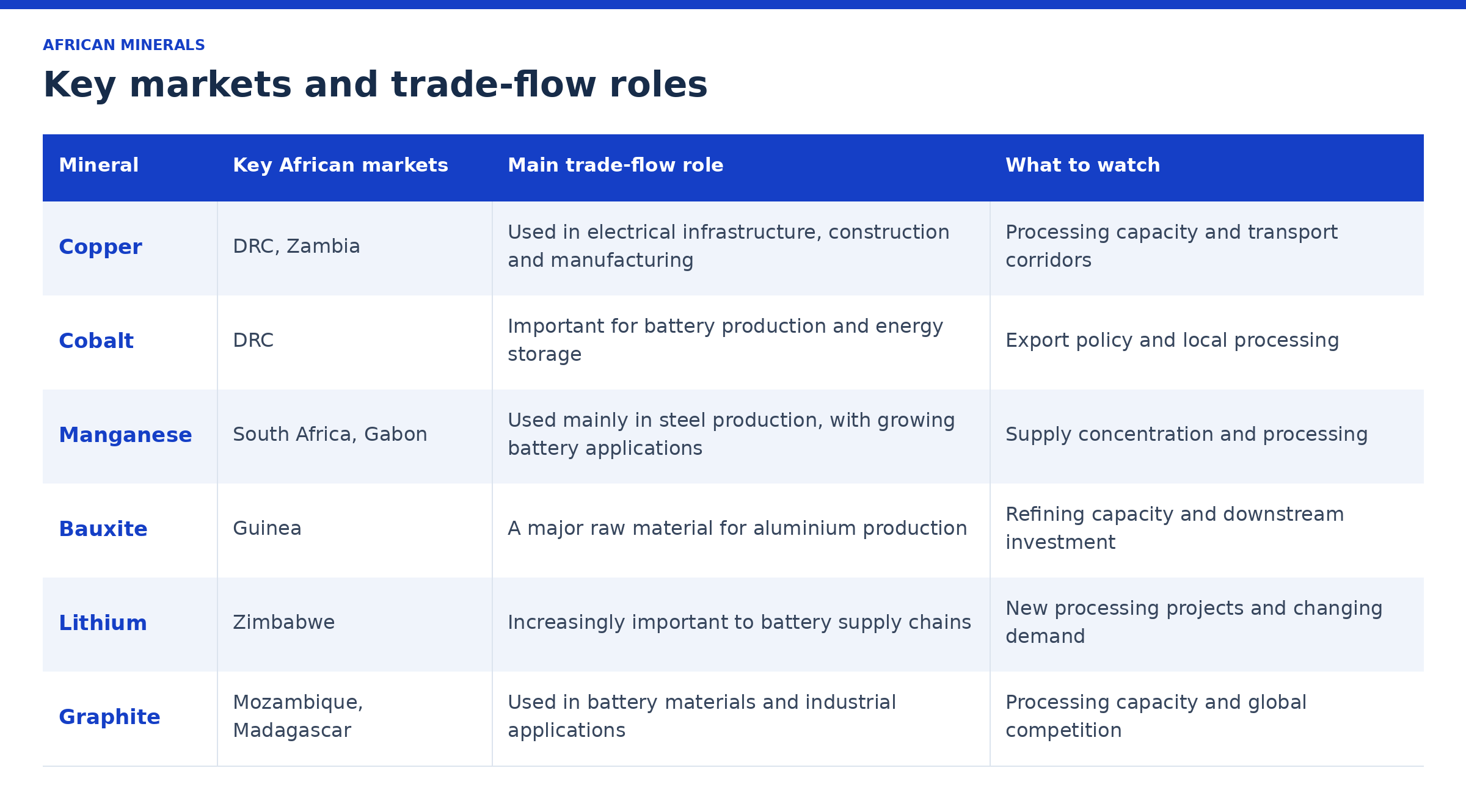
The OECD’s 2026 assessment highlights the importance of African producers in global mineral supply. The DRC is a major cobalt producer, while South Africa and Gabon are leading manganese producers. Guinea is also a significant bauxite producer, accounting for approximately 25% of global output.
These markets matter not only because of the resources they produce, but also because of the role those resources play in industries around the world.
How are critical minerals changing African trade flows?
Demand for minerals such as copper, cobalt, lithium, graphite and manganese is growing alongside industries involved in battery manufacturing, renewable energy, electricity infrastructure and digital technology.
This creates opportunities for African producers, but there is an important distinction between extracting minerals and processing them into higher-value products.
The OECD’s 2026 assessment found that Africa accounts for 10.6% of global critical mineral exports. Using 2023 trade data, the report shows that 24% of these exports were raw materials, while 72% were semi-processed. In other words, much of the value-added processing still takes place outside the continent.
Trade policies are also changing. In its June 2026 Global Trade Update, UNCTAD reported that nearly 100 new export measures had been introduced on critical energy transition minerals globally since 2020.
For businesses involved in these markets, this means that mineral availability is only one part of the picture. Export rules, local processing capacity, infrastructure and access to international buyers can all affect where materials are sourced and how reliably they reach their destination.
Where do commodity trade flows create industrial opportunities?
The business opportunities around commodities often extend beyond the resources themselves.
Mining operations need equipment, industrial chemicals, fuel, maintenance services, storage and transportation. Processing facilities also require energy, raw materials and other industrial inputs to turn extracted resources into products that can be used by manufacturers.
This creates opportunities for businesses supplying the wider industry, not just those involved in mining.
The type of opportunity also differs from one market to another. A country with large mineral deposits but limited processing facilities may offer different prospects from one investing in refining, manufacturing or transport infrastructure.
That is why looking at the wider commodity value chain is important. Production figures tell you what a country has. Processing capacity, infrastructure and access to buyers help explain how those resources move through the economy and where businesses can participate.
How do trade corridors affect African commodity markets?
Producing a commodity is one thing; getting it to buyers is another. The roads, railways, ports and border processes connecting production centres to markets can affect the cost, speed and reliability of trade.
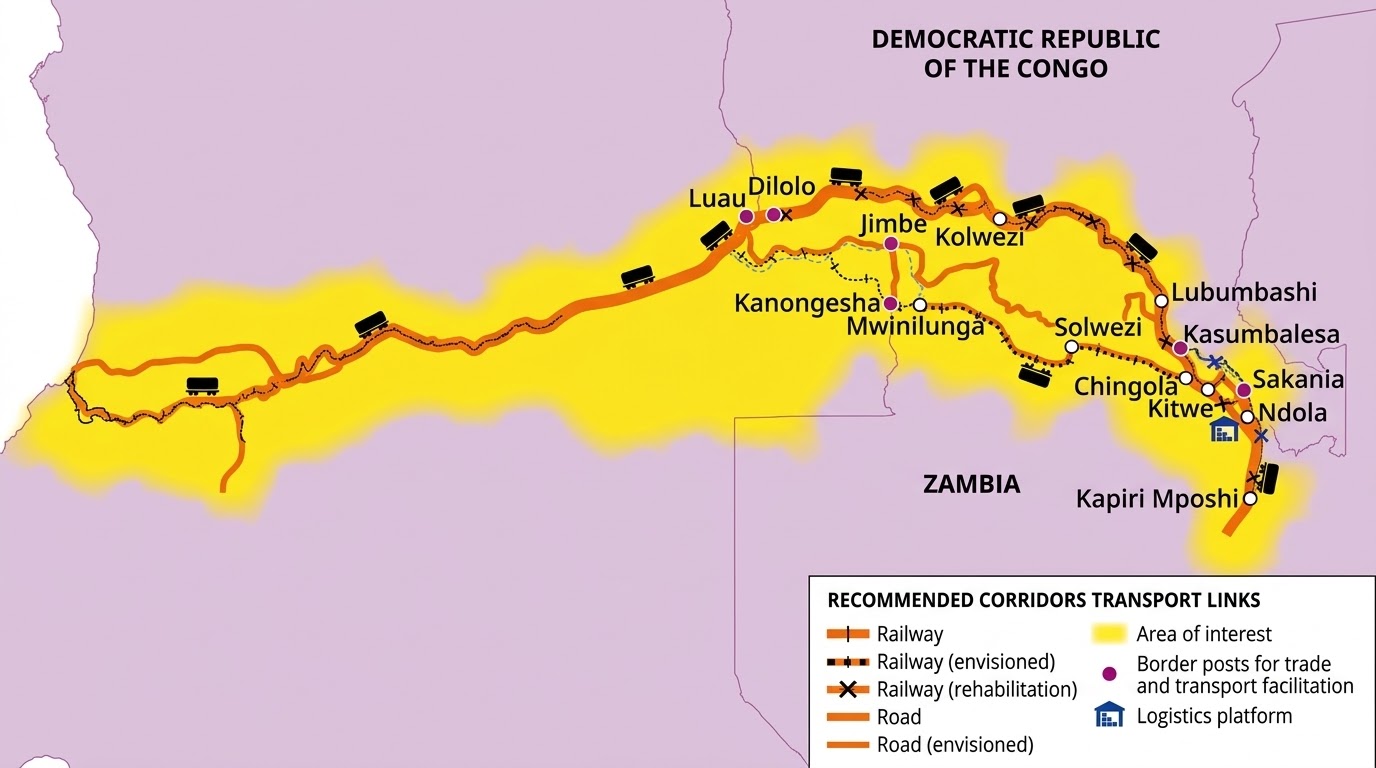
The Lobito Corridor is a good example. It connects mineral-producing areas in southern DRC and northwestern Zambia to regional and international markets through Angola’s Port of Lobito.
Projects like this can improve access to export markets and make it easier to move minerals and industrial inputs across borders. They can also influence where processing facilities and related businesses choose to operate.
For companies assessing commodity markets, it is therefore important to look beyond the location of a mine or production site. The available transport routes, border procedures, port access and reliability of delivery all matter. These are also important considerations in industrial logistics and supply-chain planning.
What about Africa’s agro-commodity trade?
Minerals are only one part of Africa’s commodity trade. Agricultural products such as cocoa, cashew, coffee, grains and oilseeds also connect African producers with processors, manufacturers and international buyers.
West and East African markets play important roles in these supply chains. However, opportunities are not limited to growing or exporting commodities. Storage, aggregation, processing and transportation are also important parts of getting agricultural products to market.
As demand for processed agricultural products develops, these activities can create opportunities for businesses across the supply chain. Matta’s agro-commodities outlook examines some of the trade volumes, corridors and settlement factors shaping these markets.
Turning commodity intelligence into trade decisions
Africa’s commodity markets are changing. Governments are looking to capture more value from their natural resources, while international industries are seeking reliable supplies of essential materials.
For businesses considering these markets, understanding the full trade chain is a useful starting point. This means looking at what is produced, where it is processed, how it reaches buyers and what industries depend on it.
These details can help businesses identify where demand is developing, which markets are better connected and where opportunities exist beyond the export of raw materials.
Matta connects commodity buyers, producers and suppliers through sourcing, logistics, fulfilment, trade finance and settlement infrastructure. Businesses can explore the commodities and agro-commodities trade ecosystem to learn more about how these activities connect across African markets.