

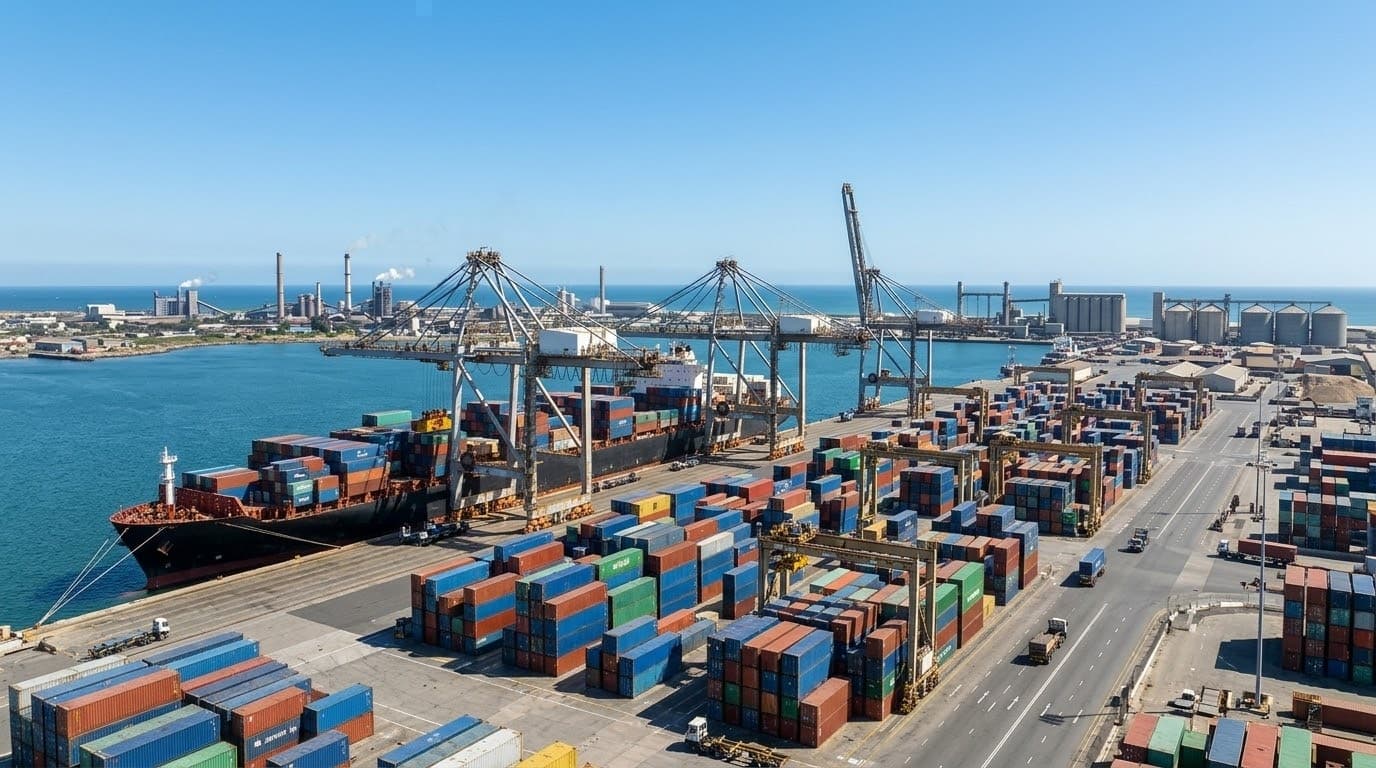
African industrial supply chains connect manufacturers to the materials, suppliers, transport networks and financial services needed to complete trade. A dependable supply chain requires these functions to work together. Finding the right input is only the first step. Goods must reach their destination, financing must be available where needed, and payment obligations must be fulfilled.
How do African industrial supply chains work?
An industrial supply chain connects five activities: sourcing inputs, agreeing on a transaction, moving goods, financing the trade and completing payment and settlement. Each depends on the others. A manufacturer may find a suitable supplier, but unreliable freight, limited working capital or unclear payment terms can prevent the transaction from being completed as planned.
These connections become particularly important when buyers, suppliers and financing partners operate across different African countries.
1. Where do industrial inputs come from?
Manufacturing begins with access to the materials required for production. These include chemicals, raw materials, ingredients and commodities used in sectors such as food and beverage, construction, pharmaceuticals, energy and personal care.
Inputs may come from domestic producers, regional suppliers or international markets. The choice depends on availability, quality, specifications, price and the supplier's ability to meet production requirements.
Regional value chains connect producers and processors in one country with manufacturers in another. However, access to a material does not guarantee availability in the required grade, quantity or delivery schedule. Your sourcing decision must account for both the product and the reliability of the supply relationship.
2. How does freight connect suppliers to manufacturers?
After a transaction is agreed, goods must move from the supplier to the buyer. Depending on the product and route, this may involve road transport, shipping, warehousing, border clearance and multiple logistics providers.
Infrastructure quality, customs procedures, transport capacity, documentation and shipment visibility all affect the movement of industrial goods.
These factors explain why logistics performance is not simply a question of distance. A shorter route may still be difficult to manage if border processes or transport services are unpredictable.
Freight planning should therefore form part of your sourcing and pricing decisions, not an afterthought once a purchase has been made.
3. Why does trade finance matter?
Physical trade often requires businesses to commit funds before a transaction is complete. Suppliers may need working capital to purchase or prepare goods, while buyers may need credit to pay for inputs before generating revenue from finished products.
Trade finance helps bridge this timing gap through instruments such as letters of credit, guarantees, documentary collections and supply chain finance arrangements. The appropriate structure depends on the transaction, counterparties and financing risks.
4. What happens during payment and settlement?
Payment and settlement are related, but they are not identical. Payment is the transfer of money from one party to another. Settlement is the process through which the financial obligations arising from a transaction are discharged.
Cross-border transactions may involve different currencies, banking arrangements, payment terms and documentation requirements. Before a transaction proceeds, buyers and suppliers should agree on when payment is due, which currency will be used, what documents are required and how completion will be confirmed.
Foreign exchange availability and payment channel reliability can affect the timing and cost of trade. Establishing settlement arrangements during commercial negotiations helps prevent avoidable delays when goods are ready for delivery.
5. Where do industrial supply chains break down?
Problems often arise when one part of the supply chain operates without sufficient information or coordination from the others.
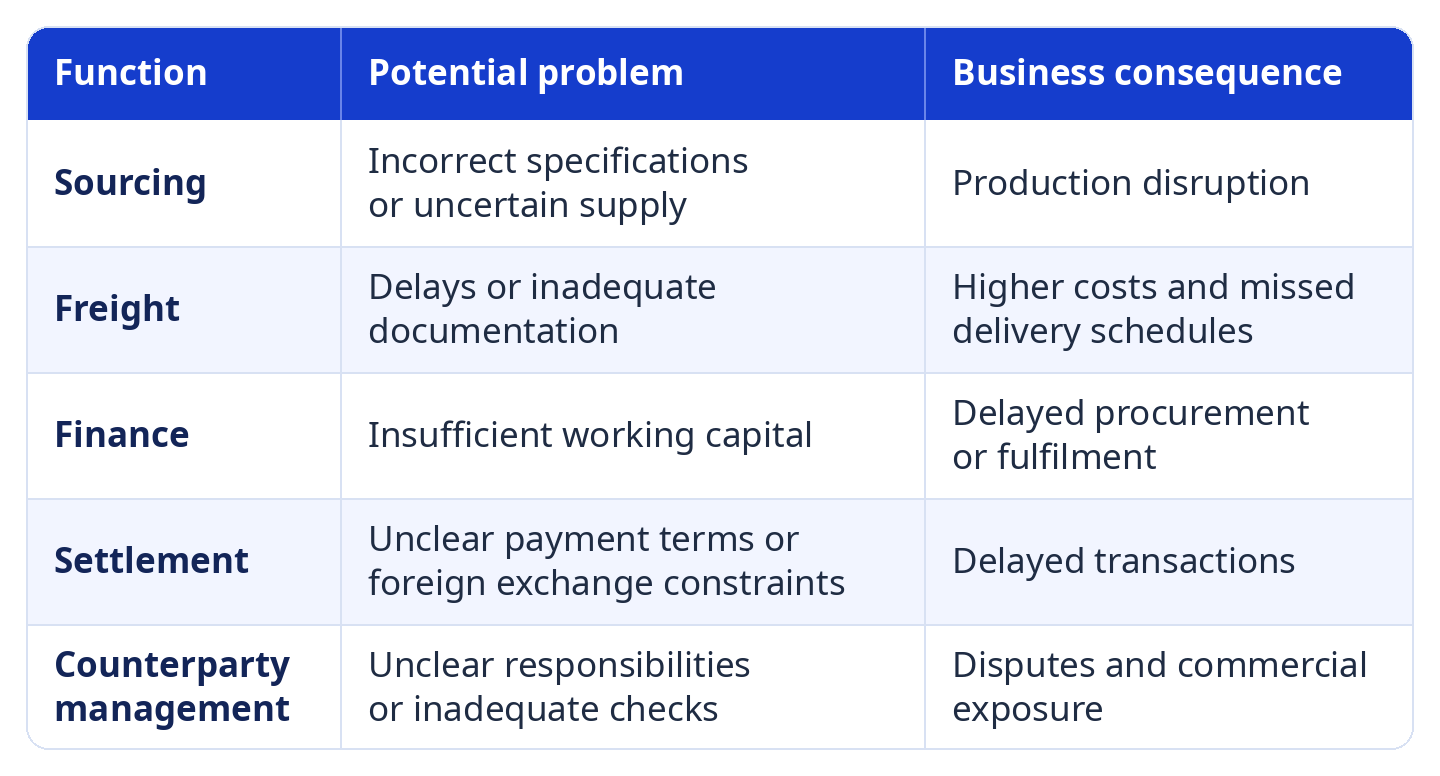
These challenges are connected. A shipment delay can affect payment timing, while incomplete product documentation can hold up customs clearance. A supplier's working capital constraints may also affect its ability to fulfil an order.
Improving one function may not resolve a problem caused elsewhere in the chain.
How can these functions work as one connected trade process?
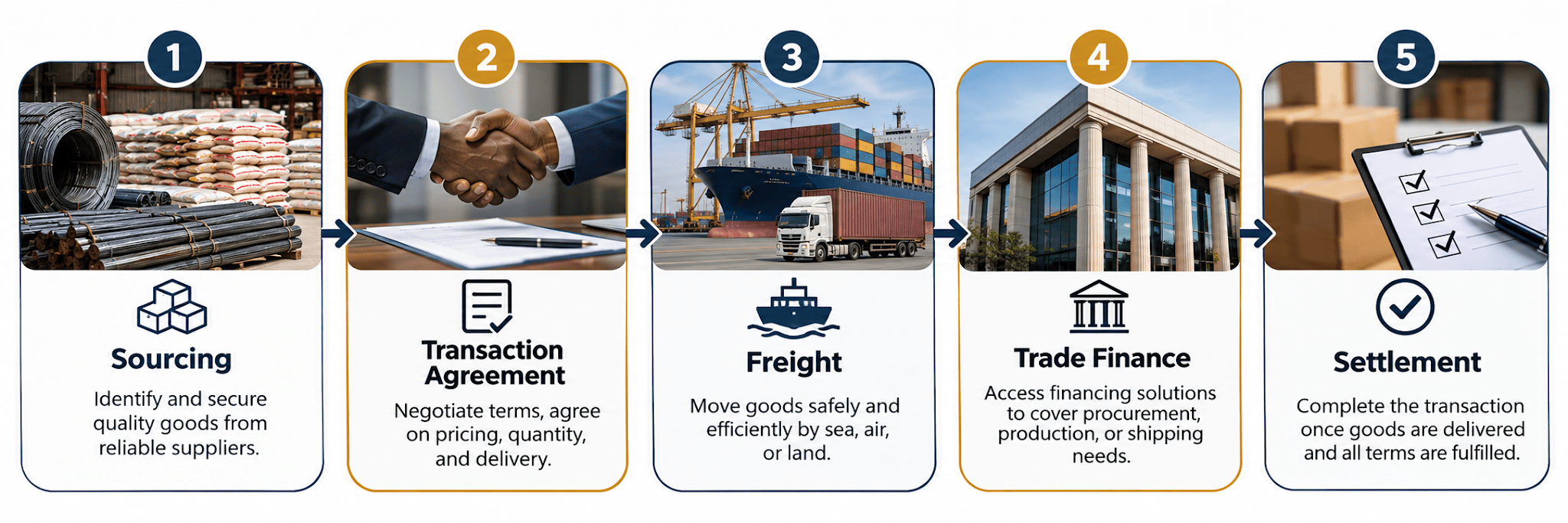
A coordinated industrial supply chain follows five connected stages:
- Source: Identify the required input, supplier, specification and quantity.
- Agree: Establish pricing, responsibilities, delivery conditions and transaction terms.
- Move: Coordinate transport, documentation, warehousing and delivery.
- Finance: Arrange the working capital or trade finance required.
- Settle: Complete the agreed payment and financial obligations.
These steps may overlap, but each requires clear ownership and reliable information.
Building more dependable African industrial supply chains
Dependable African industrial supply chains connect access to inputs with the infrastructure needed to complete trade. Manufacturers need reliable sourcing, suppliers need access to credible demand, and financing partners need visibility into the transactions they support.
Matta brings these functions together through an ecosystem connecting sourcing, supplier operations, logistics around physical trade.
Explore Matta's trade infrastructure to understand how these functions connect across the African industrial trade ecosystem.